在充满不确定性的环境里,直觉常常被当成快速决策的工具。但直觉并不总是可靠,关键不在于有没有直觉,而在于依赖的是哪一种直觉。
Startups are used to dealing with a world of uncertainty.
Making fast, intuitive decisions is one of the most common ways to counter this. Instead of painstakingly exploring all possible options, intuition can help safely guide us towards the right ones.
But intuition can mislead us too. Especially if we rely on the wrong kind.
创业公司面对的是一个不确定性的世界。快速、直觉式决策,往往被当成应对不确定性的常见方法;但如果依赖的是错误的直觉,它同样会把人带偏。
两种不同的直觉
1. 专家直觉
专家直觉是一种基于熟悉感的快速判断。人会从过去成功的经验里抽取模式,再把这些模式套用到新的选择上。
Most of us rely on what’s called expert intuition – the snap judgment kind where you recognise something familiar. We draw on positive experiences that have worked in the past. If a blue button was clicked more times than a red button, expert intuition would tell us to choose the blue one the next time.
例如,一个蓝色按钮过去比红色按钮获得更多点击,那么专家直觉会倾向于继续选择蓝色按钮。它的优势是快、稳、低风险,看起来也更像是在重复成功。
但它的问题也很明显:
- 容易把过去的局部经验误当成普遍规律
- 倾向于选择已经被验证的小收益
- 会压制高风险但高回报的新可能性
On paper, this seems like a good thing – it leads us back to what’s successful. But it means we forgo the risky, 10,000x returns, in favour of the proven 10%.
这种直觉擅长优化已有路径,却不擅长发现真正突破性的方向。
2. 战略直觉
战略直觉不是瞬间识别熟悉模式,而是在长期和问题相处之后,逐渐浮现出来的判断。
But there’s a different kind we can use – strategic intuition. It’s the type that comes to us in the shower, or while walking down the road. Unlike expert intuition, it’s not a lightning bolt of insight. It only comes when we’ve had the opportunity to live with the problem we’re solving.
它通常不会在高压、匆忙、应激反应里出现,反而更容易出现在洗澡、散步、发呆、暂时离开问题的时候。它依赖的不是条件反射,而是长时间的酝酿。
战略直觉更像是:
- 先对问题有足够深的浸泡
- 暂时不急着下结论
- 让尚未成形的联系慢慢浮现
- 最后出现一个比常规答案更完整的方向
这类直觉往往更接近真正重要的创新。
保罗·兰德的例子
保罗·兰德曾用一个简单练习测试学生的直觉:给出几条线,让学生“用这些线做出一个东西”。
Take this Rorschach test used by Paul Rand to test his students’ intuition. A group of students were given a simple task: “Make something of these lines”. Rand saw the obvious – a smiling face. But he went further; adding some color and shading to create an image of a clown.
他先看到了一个显然可见的笑脸,但没有停在那里,而是继续加上颜色和阴影,把它发展成一个小丑形象。
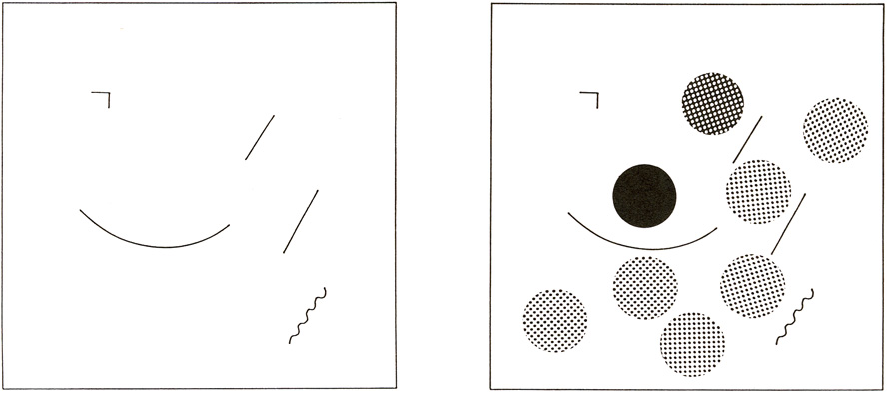
His students did the opposite. None used color, and none ventured outside the square. Their intuition actually restricted them from doing something groundbreaking.
大多数学生则停在更保守的位置:
- 不使用颜色
- 不越出方框
- 不继续推进最初的图形联想
这说明,很多时候限制创造力的不是能力不足,而是过早服从了“看起来最合理”的第一直觉。
为什么快速环境更容易误用直觉
在创业公司、产品团队和高节奏组织里,人很容易被迫持续做出快速反应。环境奖励的是即时回答、快速行动和尽快产出方案,而不是长时间停留在问题本身。
Working at a startup, it’s rare we get the time to use this type of strategic intuition. We’re usually forced to be reactive, rather than reflective. But in reality, if you’re too quick to find a solution, you’re probably not thinking hard enough about the problem.
但如果一个方案来得太快,常常意味着对问题的理解还不够深。
常见的误区包括:
- 过早把注意力转向解决方案,而不是问题定义
- 把“立刻回答”误认为“思考充分”
- 用熟悉经验替代真正的探索
- 因为时间压力,主动放弃尚未成熟但更有潜力的想法
在这种环境里,专家直觉会被频繁调用,而战略直觉则几乎没有生长空间。
更好的做法
与其追求第一个答案,不如为更成熟的判断争取时间和空间。
可以提醒自己:
- 不要急于确认最先出现的模式
- 把一部分时间留给对问题本身的反复理解
- 允许想法先处于“半成形”状态
- 给思考留出非工作的空白时间,例如走路、洗澡、独处
- 区分“熟悉所以顺手”和“真正适合当前问题”
So don’t let intuition trick you into seeing patterns and connections that aren’t there. Rather than being the first to answer every question, fight for the time and space to let those half-formed ideas rise to the fore. When only the glib ideas win, we all lose.
真正值得依赖的直觉,往往不是最快冒出来的那个,而是经过沉淀后仍然成立的那个。
核心结论
直觉并不天然等于高质量判断。
- 专家直觉帮助人快速回到熟悉、稳妥、已验证的路径
- 战略直觉帮助人穿过表面经验,看到更深层的问题结构和新可能性
如果只有那些流利、轻巧、立刻能说出口的想法获胜,那么很多真正有价值的想法,往往在出现之前就已经被淘汰了。